Direct patent infringement where only components of the claimed product are offered
Updated: Sep 14, 2025
On 12 September 2025, the Mannheim Local Division (UPC_CFI_338/2024) found direct patent infringement if a product is specifically designed so that its components can be easily assembled at the place of use without the addition of further objects, the mere offering or supplying of all components constitutes a direct patent infringement within the meaning of Article 25(a) EPC.
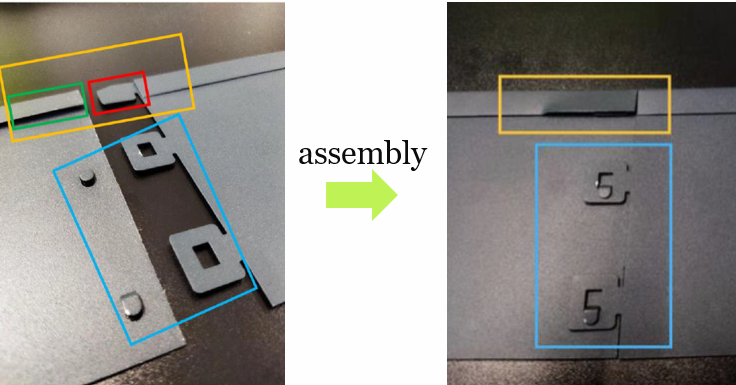
Claim 1 of the patent in suit EP 2 223 589 states:
Enclosure for beet and grassland areas consisting of
1. at least two sheet metal strips, which
2.1 can be connected to one another at the end face,
2.2 are flanged, at least at the upper longitudinal side, and,
2.3 in the region of their end faces form connecting ends (2, 3),
2.3.1 which are inserted into one another to mutually overlap,
2.3.2 the one connecting end being configured as a tongue (4),
2.3.3 which engages in the opposing connecting end in a receiving slot (16) arranged there,
characterised in that
2.3.4 a receiving slot (16) arranged in the flanging of the one connecting end (3)
2.3.5 can be placed on the tongue (4) at the other connecting end (2)
2.3.6 in the perpendicular direction with respect to the longitudinal extent of the sheet metal strip (6).
The decision addresses the following interesting aspects:
Admissibility of amending the claims in the reply in infringement proceedings
Inventive step: Obviousness even without specific prompting or suggestion
Distinction between direct and indirect patent infringement: offering and supplying components
Licence negotiations can support the allegation of patent infringement
Admissibility of amending the claims in the reply in infringement proceedings (para. 30)
The amendment of the claims with the reply in infringement proceedings is admissible if the added "in particular if" clauses correspond to those versions of the patent in suit which the claimant defends in the alternative with its request for amendment of the patent. The claimant thus indicates that, if necessary, it will also base its claim on one of these versions. The admissible (alternative) defence of the patent in suit in one or more limited versions in the case in dispute means that the infringement action may also be based on these limited versions (see Local Chamber Mannheim, decision of 2 April 2025, UPC_CFI_359/2023, para. 28 – Fuji v. Kodak et al.; decision of 6 June 2025, UPC_CFI_471/2023, para. 50 – DISH et al. v. Aylo et al.)
Inventive step: Obviousness even without specific prompting or suggestion (para. 76)
The use of a particular means may, in exceptional cases, be obvious even without specific prompting or suggestion if the means belongs to the common general knowledge of the skilled person as a general means to be considered for a variety of applications, the use of its functionality in question is objectively appropriate in the specific context, and no special circumstances can be identified that would make the use of the means appear impossible, difficult or otherwise impractical from a technical point of view (cf. LD Mannheim, decision of 2 April 2025, UPC_CFI_359/2023, para. 121 with reference to BGH, judgment of 15 June 2021 – X ZR 58/19, GRUR 2021, 1277 para. 47 – guide rail arrangement).
Distinction between direct and indirect patent infringement; offering and supplying components (para. 108 and para. 122)
If a product is specifically designed so that its components can be easily assembled at the place of use of the product without the addition of further objects, the offering or supplying of all components already constitutes a direct patent infringement within the meaning of Art. 25(a) EPC.
If a product consists of at least two identical, coordinated components which, according to their design, are intended to be assembled into the claimed product without the addition of further objects, the individual sale of such a component generally constitutes a direct patent infringement within the meaning of Art. 25(a) EPCU if the possibility of assembly is indicated or is otherwise obvious.
Licence negotiations may support the allegation of patent infringement (para. 110)
The plaintiff has good reasons to assert placing on the market and offering of a claimed product in a specific UPC member state, when the defendant had requested a licence for this UPC member state in pre-trial licence negotiations. Against this background, the defendant should have explicitly stated that orders from this specific UPC member state would not be processed and how this was ensured by their internal work organisation. Furthermore, they should have explained that, and if applicable, why the request for a licence for this specific UPC member state was not based on offers already made or preparations for imminent placing on the market of this UPC member state.
Patent infringement by managing director (para. 113)
According to the UPCA, the position of managing director of a company is not sufficient in itself to assume that the managing director has infringed a patent. In this respect, the same applies as for liability under Art. 63 (1) sentence 1 UPCA as an intermediary, for which the mere function of managing director is also not sufficient (cf. Court of Appeal, order of 29 October 2024, GRUR-RS 2024, 29496 marginal no. 66). Rather, the managing director must at least be involved in the specific patent infringement in question.
Comments